
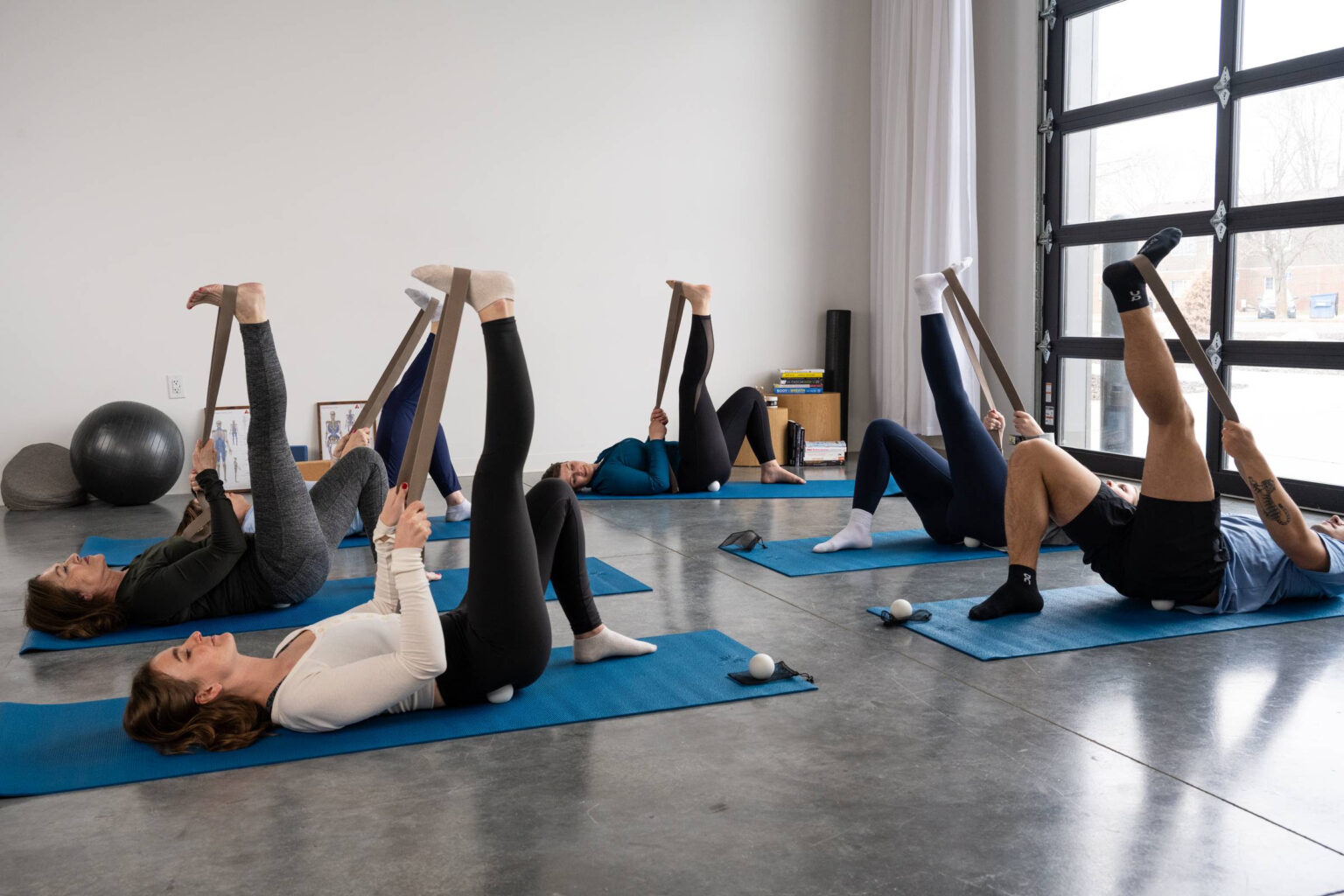
I’ve spent a lot of my career talking with people about what they want to be able to do. Sometimes the answer is something bigger, like getting back to work after a surgery, taking a larger trip, or returning to a hobby they used to love. Just as often, it’s something that would sound completely ordinary to anyone else: getting down on the floor with their grandkids, making it through the grocery store without needing a break, getting dressed without worrying about their back, or sitting in a restaurant to enjoy a meal with friends.
Those conversations have shaped the way I think about health because they remind me that most of us aren’t working on our health simply for the sake of being healthier. We may want to get stronger, improve our mobility, build endurance, sleep better, recover from an injury, or manage a health condition, but there is usually something beyond the goal itself that matters to us.
What Is All Of It For?
The things we do, places we want to go, and how we get there matters uniquely to each of us and translates directly to our health. You may have ideas for what those things may be, and you also may know that they are different person to person. Our bodies are different, our lives are different, and what we need and want from our health is different too.
Healthcare becomes much more personal when we make room for that. Measurements like strength, mobility, balance, pain, endurance, and even lab values can give us important information, but they don’t tell us what that information means in the context and realities of someone’s life.
Health Lives Outside an Appointment
Most of us have had those moments in an appointment where we explain our symptoms, the provider asks us to show them where or how, and (of course) it’s fine and then comes right back as soon as we leave the appointment.
Our health shows up in The Things We Do and all of the moments in between.
We don’t need to monitor every sensation or turn everyday life into another health assessment. But I do think there is value in paying attention to the ordinary things. What feels easy, what takes more effort than it used to, what we’ve adapted without really thinking about it, and what we want to keep doing for a long time. Those parts of everyday life can tell us quite a bit about our health.
What’s Worth Noticing
Think about one ordinary Thing You Do that your body engages in every day. It doesn’t need to be impressive, athletic, or important to anyone else. Maybe it’s something you hope to keep doing for a very long time, something you’ve worked hard to return to, or something you’ve never really thought about before.
Pay attention to that Thing You Do. Notice what feels easy, what takes a little more effort, and what helps you do it comfortably.
Then ask yourself one simple question: Why does being able to do this matter to me?
Noticing the connection between what our bodies can do and what makes our lives feel like our own is a useful place to start!
For me, one of those Things I Do is being outside. Having the ability to move my body, be surrounded with my environment and be in nature is a way I feel more connected to myself.
I don’t think I would have called “being outside” a health goal a couple years ago. But the longer I work in healthcare, the more I appreciate that taking care of your health isn’t only about preventing something from going wrong. It’s also about giving ourselves the best opportunity we can to keep participating in the parts of life that matter to us.
Whatever your Thing You Do is, I hope you get to keep doing it for a very long time!